
Introduction: How Search Is Changing in the AI Era
Search behavior is no longer limited to typing keywords into Google and clicking blue links. Today, people expect direct answers, voice responses, and even AI-generated summaries that explain topics instantly. This shift is changing how websites are discovered and how content is evaluated.
Traditional search engine optimization still plays a strong role, but it is now supported by new approaches that focus on answering user questions and appearing in AI-driven results. Businesses, including those competing in busy markets like New York, must understand how these methods work together to stay visible online.
What Is SEO? (Search Engine Optimization)
Search Engine Optimization, or SEO, is the process of improving website structure and content so that search engines can rank it higher for relevant searches. It focuses on technical setup, content quality, and authority signals from other websites.
How Traditional SEO Works
SEO helps search engines understand what a page is about and whether it deserves to appear for certain queries. This includes optimizing headings, internal links, mobile performance, and page speed. Strong SEO also depends on how well a site matches user intent, not just keywords.
Where SEO Still Matters Today
Even with AI search tools growing, organic rankings still drive large amounts of traffic. Many businesses continue to rely on search engine optimization services to improve long-term visibility, especially for competitive local and service-based searches. SEO remains the foundation on which newer optimization methods are built.
What Is AEO? (Answer Engine Optimization)
Answer Engine Optimization focuses on helping content appear as direct answers rather than traditional search results. This includes featured snippets, voice assistants, and quick answers shown at the top of search pages.
Optimizing for Featured Snippets and Voice Search
Answer engines prefer short, clear explanations that directly solve user questions. Instead of long paragraphs, content is structured so that answers can be extracted easily and displayed in response boxes or voice replies.
Content Structure for Direct Answers
AEO depends heavily on clarity and organization. Well-written definitions, step-by-step explanations, and properly formatted headings help search systems understand which part of the content solves a specific query.
What Is GEO? (Generative Engine Optimization)
Generative Engine Optimization, or GEO, focuses on how content is used by AI systems that create summaries instead of showing direct links. These systems analyze large amounts of content to generate complete answers.
How AI Search Engines Generate Results
AI engines do not only rank pages; they interpret topics and combine information from multiple sources. This means content must be factually accurate, context-rich, and semantically clear to be trusted by generative models.
Optimizing Content for AI Summaries
For GEO, content should explain topics fully instead of focusing on isolated keywords. Pages that cover related concepts, definitions, and examples are more likely to be referenced by AI systems when generating responses.
Although SEO, AEO, and GEO all aim to improve online visibility, they focus on different stages of how users discover and consume information. Each method is designed for a specific type of search behavior, from traditional rankings to AI-generated responses. Understanding these differences helps businesses apply the right optimization techniques at the right time.
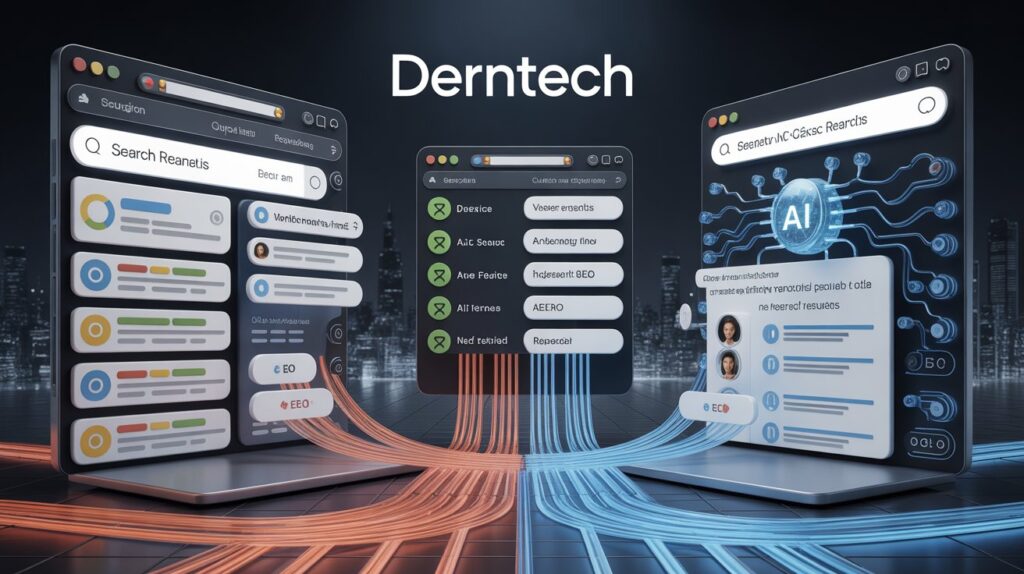
Ranking vs Answering vs Generating — How Each Strategy Works
| Optimization Type | Primary Goal | Where Results Appear | Main User Interaction |
| SEO (Search Engine Optimization) | Rank web pages for relevant search queries | Traditional search result pages (blue links) | Users click and explore full web pages |
| AEO (Answer Engine Optimization) | Provide direct answers to specific questions | Featured snippets, voice assistants, quick answers | Users receive instant responses without browsing |
| GEO (Generative Engine Optimization) | Become a trusted source for AI-generated summaries | AI-powered search results and chat-based platforms | Users read synthesized answers created by AI |
Content and Technical Focus Compared
| Area of Focus | SEO | AEO | GEO |
| Content Style | In-depth pages targeting search intent | Short, clear, question-based answers | Context-rich explanations covering full topics |
| Technical Factors | Site structure, internal links, backlinks | Clean formatting, headings, concise sections | Semantic clarity, entity relationships, topical depth |
| Optimization Priority | Search engine ranking algorithms | Answer extraction and voice compatibility | AI interpretation and knowledge synthesis |
While each strategy has its own technical and content requirements, the strongest digital presence comes from combining all three approaches into a single, well-structured content plan instead of treating them as separate systems.
Why Businesses Need All Three Strategies
Modern users switch between searching, asking, and reading AI summaries depending on the situation. Businesses that rely on only one method risk missing large parts of their potential audience.
Visibility Across Search, Voice, and AI
Websites that perform well across SEO, AEO, and GEO appear in more digital spaces. This improves discoverability whether users are browsing, speaking, or reading AI-generated explanations.
Building Trust and Authority Signals
Search engines and AI systems both favor sources that show consistency and subject expertise. This is why many companies working with an SEO agency now also focus on structured content and topical coverage rather than only ranking tactics.
How to Optimize Content for SEO, AEO & GEO Together
Instead of creating separate strategies, businesses can align their content with all three methods through smarter planning and structure.
Topical Authority and Entity Coverage
Topical authority means covering a subject fully, not just targeting single keywords. When content explains connected ideas, tools, and problems, search systems recognize the site as a reliable source.
Structured Content and Clear Context
Content should guide both users and machines through logical explanations. Clear headings, focused sections, and meaningful internal links help search engines, answer engines, and AI tools interpret the information correctly.
Many companies using professional SEO services now prioritize content frameworks over isolated optimization techniques.
The Future of Search Optimization: What to Expect Next
Search will continue shifting toward more personalized and AI-driven experiences. Instead of ranking pages alone, platforms will prioritize understanding meaning, intent, and credibility.
Websites that invest in quality information and technical reliability will adapt more easily as search systems evolve. This is especially important in competitive digital environments where visibility depends on multiple discovery channels.
Final Thoughts: Adapting to the New Search Landscape
SEO, AEO, and GEO are not competing methods; they are connected parts of modern search optimization. Together, they reflect how people now find information through rankings, answers, and AI-generated content.
Businesses that treat optimization as a long-term strategy, rather than a quick traffic solution, are better prepared for future changes. Whether working with a local team in New York or managing global visibility, understanding how these systems work together is now essential for sustainable online growth.As search evolves, understanding how AI is transforming SEO has become essential for businesses that want to stay visible and competitive. By combining traditional optimization techniques with strategies that focus on AI-driven results, companies can reach more users and improve engagement.